Info Centre
The African Journal of Diabetes Medicine ISSN: 2053-4787
Welcome to the African Journal of Diabetes Medicine. Many of you will have known the title under its former name of Diabetes International
The African Journal of Diabetes Medicine is a Bi-Annual Journal which publishes articles on all aspects of diabetes medicine and practice, from all health professionals, medical and non-medical. The philosophy of the journal is to be both an outlet for original research, as well as a forum for educational review articles. Above all, we want African Journal of Diabetes Medicine to be practical and relevant to health professionals.
Abstracted and Indexed in:
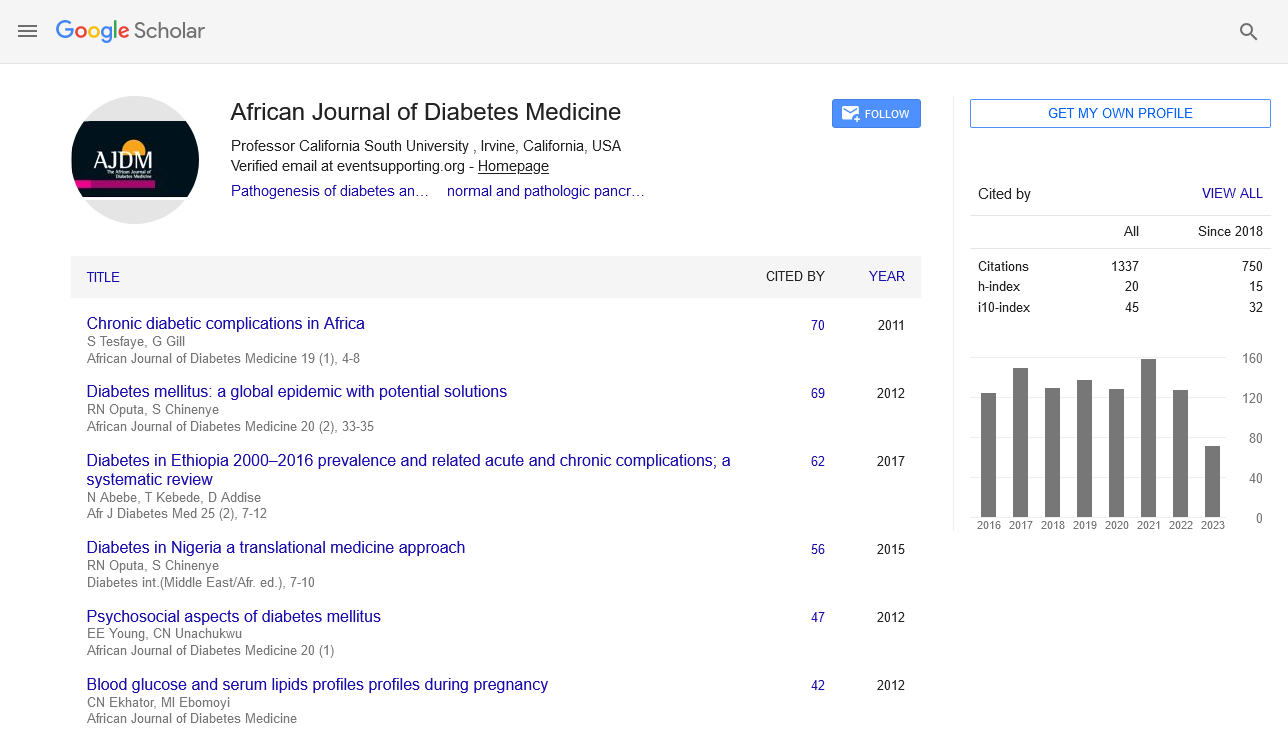
The African Journal of Diabetes Medicine is currently Indexed in ISI, Web of Science and SCOPUS (In process) Google Scholar with H-Index 1.
Submit Manuscript
Submit manuscript at
www.scholarscentral.org/submissions/africanjournalof
diabetesmedicine.html
maltepe escort
tuzla escort
gebze escort
Publication Charges:
Authors are requested to pay 1819 EUROS for each accepted article. Author/authors can withdraw any manuscript prior to the publication. However, if author/authors wishes to withdraw the manuscript after review process, the author/authors are expected to pay 40% of processing charges as fee, as the organization incurs cost towards formatting, quality control and editing.
Peer review:
This scholarly publishing journal is using double blind peer review process for quality review process. Editorial system is an online manuscript submission, review that tracks the progress of the article. Review processing is performed by the editorial board members or outside experts; at least two independent reviewer's approvals followed by the editor is required for the acceptance of any citable manuscript.
In addition to cardiac structure and hemodynamic function, contemporary clinical cardiology increasingly emphasizes the role of metabolic factors in cardiovascular disease progression and prognosis. Obesity, commonly assessed using body mass index (BMI), is now recognized as a major independent risk factor for hypertension, coronary artery disease, heart failure, and arrhythmias. Elevated BMI is closely associated with insulin resistance, systemic inflammation, and dyslipidemia, all of which contribute to adverse cardiovascular outcomes. From a clinical perspective, the assessment of
BMI laskuri provides a simple yet valuable tool for risk stratification and long-term management planning. Patients with elevated BMI often present with complex comorbidities that require a multidisciplinary approach combining lifestyle modification, pharmacological support, and ongoing cardiovascular monitoring. Weight reduction has been shown to improve cardiac workload, endothelial function, and overall metabolic health, thereby reducing cardiovascular risk. Pharmacological treatment of obesity has gained increasing attention as part of this integrated approach. Agents targeting glucose metabolism and appetite regulation, such as semaglutide-based therapies, have demonstrated benefits not only in glycemic control but also in weight reduction and cardiovascular risk modification.
Rybelsus, an oral formulation of semaglutide, has been studied primarily in the context of type 2 diabetes but is also relevant in patients with elevated BMI and cardiovascular risk factors, particularly when obesity contributes to disease progression. The use of such therapies requires careful clinical evaluation, especially in cardiology patients, where medication choice must consider cardiovascular status, renal function, and potential interactions. Rather than serving as isolated weight-loss solutions, these treatments are increasingly viewed as components of a broader cardiometabolic strategy aimed at improving long-term outcomes. As clinical cardiology evolves, the integration of obesity management into routine cardiovascular care reflects a growing understanding of heart disease as part of a systemic metabolic disorder. Addressing BMI, insulin resistance, and weight-related inflammation alongside traditional cardiac diagnostics allows clinicians to move toward more comprehensive and preventive models of care. In this context, advances in imaging, pharmacotherapy, and metabolic treatment converge to support improved cardiovascular health and patient quality of life within modern clinical cardiology practice. How to find best price
tadalafil